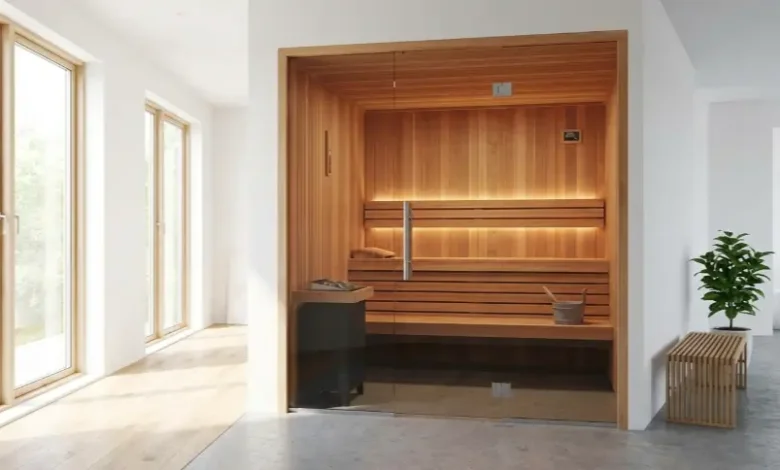
A first indoor sauna typically costs $1,500 to $3,000 for a compact plug-in infrared unit, or $4,000 to $9,000 for a mid-size traditional cabin once electrical work and flooring are included. The unit price is only part of the picture; installation labor, ongoing electricity, and basic maintenance all factor into what owning one actually costs over the first year.
What does the sauna unit itself cost?
Compact two-person infrared cabins start around $1,200 to $2,000 for the unit alone, with larger four-person models running $2,500 to $4,000. Traditional heat cabins, which include a stone heater and typically require more electrical capacity, start closer to $3,000 for a two-person build and climb to $6,000 or more for a family-size four- to six-person cabin with higher-grade cedar. Kit-based cabins that you assemble yourself run cheaper than fully pre-built units, though the labor savings only matter if you’re comfortable with basic assembly.
What does installation add to the total?
This is where the two paths diverge sharply. A plug-in infrared unit that runs on a standard 120V outlet needs no electrical work at all, so installation is really just assembly and placement, often doable in an afternoon. A traditional cabin needing a dedicated 240V circuit is a different project: expect $500 to $2,000 for the electrical work alone, more if the wire run from your panel to the sauna room is long or has to pass through finished walls. Add flooring prep, a moisture barrier pad, and possibly a new exhaust fan, and installation costs for a traditional indoor cabin commonly land between $1,000 and $3,000 on top of the unit price.
What will the sauna cost to run each month?
Once installed, a traditional 6 kW heater used four times a week typically adds $12 to $20 a month to your electric bill, while a lower-wattage infrared cabin used at the same frequency usually costs less, often $8 to $15 a month. Because the unit sits inside a heated home rather than outdoors, it isn’t losing warmth to wind or cold air, which keeps the running cost more predictable than an equivalent outdoor sauna, especially through winter.
What ongoing maintenance should a beginner plan for?
Traditional heaters need rock replacement every one to two years, typically $30 to $80 depending on rock type and quantity. Interior cedar or hemlock benefits from an occasional light sanding, especially in a room without strong airflow, since indoor humidity lingers longer than it would in an open-air outdoor cabin. Infrared units have fewer moving parts and lower maintenance overall, mostly limited to wiping down panels and checking that the exhaust fan is clearing humidity properly after sessions.
Before you commit to a size or heater type, it’s worth comparing a few models side by side to see how unit price, installation needs, and running cost scale together rather than looking at any one number in isolation. You can compare indoor cabin options directly at sweatdecks.com to see specs for both infrared and traditional builds sized for a spare room or basement.
What questions should a beginner ask before buying?
Start with your electrical panel. A quick look, or a call to an electrician, will tell you whether there’s room for a new 240V circuit if you’re leaning toward a traditional heater, and that answer alone can settle the infrared-versus-traditional decision faster than comparing feature lists. Next, measure the actual room, including ceiling height, since a lower ceiling than expected can rule out certain cabin heights or push you toward a one-person format. Finally, think honestly about how many sessions a week you’ll realistically use it. A unit bought for daily use that ends up running twice a month is a common regret, and it’s one that shows up in the math immediately, since the fixed costs of installation don’t shrink just because usage does.
It also helps to ask a seller directly about lead time and what’s included in a quoted installation price. Some indoor cabin sellers bundle the moisture barrier pad, exhaust fan, and basic electrical consultation into the purchase, while others sell the unit alone and leave every other line item to be sourced separately. Knowing which model you’re buying into changes the real total cost, sometimes by a thousand dollars or more, before a single session happens.
See also: Challenges in Sustainable Computing Adoption
Is infrared or traditional the better starting point for a beginner?
For most first-time owners, infrared is the more forgiving entry point. It costs less upfront, skips the electrical project entirely if you choose a plug-in model, and runs at a lower, easier-to-tolerate temperature while you figure out how sauna use fits into your week. Traditional heat delivers a more intense, classic sauna experience and tends to appeal more to people who already know they’ll use it several times a week, since the higher upfront and installation cost pays off faster with frequent use.
Whichever heater type you choose, research on regular sauna use offers a reasonable case for treating it as a long-term habit rather than a short-lived purchase. A Mayo Clinic Proceedings review found sauna bathing associated with a range of cardiovascular benefits, and an older review in The American Journal of Medicine described similar associations alongside a fair discussion of who should be cautious about frequent, high-heat sessions. These are association findings, not guarantees for any one person, but they’re a useful frame for weighing the upfront cost against years of expected use rather than a single season.
Frequently Asked Questions
How much does an indoor sauna cost in total, including installation?
A small plug-in infrared unit can be set up for $1,500 to $3,000 all-in. A mid-size traditional cabin with a dedicated 240V circuit typically runs $4,000 to $9,000 once you include the unit, electrical work, and flooring prep.
What is the cheapest way to start with an indoor sauna?
A compact plug-in infrared cabin that runs on a standard 120V outlet is the lowest-cost entry point, since it avoids new electrical work entirely and can often be assembled in an afternoon.
How long does it take to install an indoor sauna?
A plug-in infrared unit can be assembled and running the same day. A traditional cabin needing a new 240V circuit and flooring prep usually takes one to three weeks once you factor in the electrician’s schedule and permit inspection.
Do beginners need a traditional heater or is infrared enough?
Infrared is a reasonable starting point for most beginners, since it costs less, installs faster, and runs at a lower, more approachable temperature. Some users later upgrade to traditional heat once they know how often they’ll actually use the sauna.
What ongoing costs should a first-time owner expect?
Plan on $15 to $40 a month in electricity depending on heater type and frequency of use, plus $30 to $80 every year or two for heater rock replacement on a traditional unit, and occasional wood care for the interior.
References
- Benefits and risks of sauna bathing, The American Journal of Medicine, 2001
- Association between sauna bathing and fatal cardiovascular and all-cause mortality events, JAMA Internal Medicine, 2015
- Clinical Effects of Regular Dry Sauna Bathing: A Systematic Review, Evidence-Based Complementary and Alternative Medicine, 2018
- Saunas and your health, Harvard Health Publishing
By Marcus Feldt